Guide to Political Slang in China
Recent events, like the OnePlus AI Writer controversy, highlight the sensitivity surrounding political expression. This guide explores the nuanced world of Chinese political slang,
revealing how citizens navigate censorship and convey meaning through coded language and internet trends.
Chinese political discourse is a fascinating, and often obscured, arena. Openly discussing sensitive topics carries significant risk, leading to a rich tradition of indirect communication. This has fostered a unique linguistic landscape where political commentary thrives through slang, euphemisms, and coded language. The recent incident with OnePlus’s AI Writer, blocking terms like “Dalai Lama,” exemplifies the ongoing tension between technological advancement and political control.
Historically, this indirectness stemmed from imperial court practices and evolved dramatically during the Cultural Revolution. Today, it’s largely a response to sophisticated censorship mechanisms employed by the government. The internet, particularly platforms like WeChat and Weibo, has become a crucial battleground – and breeding ground – for this slang. Understanding these terms isn’t simply about decoding words; it’s about grasping the subtle ways Chinese citizens express dissent, critique policies, and engage in political debate within a restrictive environment. This guide aims to unpack this complex system.
I. Historical Roots of Political Slang
The use of veiled language in Chinese politics isn’t a modern phenomenon. Throughout imperial history, officials employed euphemisms and coded words to navigate court intrigue and avoid direct confrontation with the emperor. Direct criticism was often perilous, necessitating subtle communication. This tradition continued, and arguably intensified, during the tumultuous Cultural Revolution (1966-1976).
The Cultural Revolution saw language weaponized; seemingly innocuous phrases could carry subversive meanings, and accusations were often veiled in coded language. This period instilled a deep-seated habit of indirectness. Post-Cultural Revolution, while overt political expression remained restricted, the need for coded communication persisted. The rise of the internet then provided new avenues for this practice, building upon centuries of linguistic adaptation. Therefore, contemporary slang isn’t born in a vacuum, but rather represents the latest iteration of a long-standing tradition of navigating political constraints through language.
A. Imperial Era Euphemisms and Code Words
During China’s imperial dynasties, direct criticism of the emperor or court policies was fraught with danger. Consequently, officials and scholars developed a sophisticated system of euphemisms and coded language. For example, criticizing an emperor’s policies might be framed as concern for “the harmony of the realm,” rather than direct disapproval. Allusions to historical events or figures served as veiled commentary on contemporary issues.
These weren’t simply about avoiding punishment; they were a demonstration of erudition and political savvy. Understanding the subtle layers of meaning was a mark of intelligence. Furthermore, court intrigue demanded discretion. Messages were often crafted to be understood only by the intended recipient, utilizing shared knowledge and literary references. This practice fostered a culture where indirectness became a valued skill, laying the groundwork for later forms of political expression through coded language, a tradition that continues to influence communication today.
B. The Influence of the Cultural Revolution
The Cultural Revolution (1966-1976) profoundly impacted Chinese political discourse, fostering an environment of intense ideological scrutiny and denunciation. While overt political expression was largely limited to approved slogans and revolutionary jargon, a parallel language of coded criticism began to emerge. Fear of retribution meant individuals couldn’t openly voice dissent, leading to the development of subtle ways to express disagreement or skepticism.
Red Guard terminology, ironically, became a tool for subversion. Phrases praising Chairman Mao could be delivered with a tone suggesting the opposite. Personal attacks were often disguised as “struggle sessions” framed within the approved ideological context. This period ingrained a deep-seated habit of speaking in double meanings and reading between the lines. The trauma of the era created a lasting sensitivity to political language, shaping the development of later slang as a means of navigating censorship and expressing dissent indirectly.
II. Contemporary Slang: A Response to Censorship
In the face of increasingly sophisticated censorship, contemporary Chinese political slang has flourished as a creative outlet for expressing dissent and circumventing restrictions. The internet, particularly social media platforms, has become a breeding ground for this linguistic innovation. Rather than direct criticism, users employ irony, satire, and coded language to discuss sensitive topics. This isn’t simply about avoiding detection; it’s a form of resistance, reclaiming agency in a tightly controlled information environment.
Two key strategies dominate: xiehouyu (homophones and puns) and wangyi (internet slang). These techniques allow users to share opinions on politically sensitive issues – like the Dalai Lama or territorial disputes – without triggering censorship algorithms. The recent controversy surrounding OnePlus’s AI Writer, blocking politically sensitive terms, underscores the ongoing battle between expression and control, further fueling the need for such linguistic creativity.
A. The Rise of “Xiehouyu” ⸺ Homophones and Puns
Xiehouyu, literally “post-harmonious language,” represents a masterful adaptation to censorship, leveraging the tonal nature of Mandarin Chinese. This technique relies on homophones – words with the same pronunciation but different characters – and puns to convey politically sensitive meanings indirectly. By substituting characters with similar sounds, users create layers of meaning that can be understood by those “in the know” while appearing innocuous to censors.
A prime example is the “Grass Mud Horse” (caonima), a deliberately vulgar-sounding phrase that sounds similar to a phrase criticizing the Communist Party. This clever wordplay allowed widespread online protest without direct confrontation. Xiehouyu isn’t merely about evasion; it’s a demonstration of linguistic skill and a shared understanding amongst internet users, fostering a sense of community and resistance against restrictions on free speech. The effectiveness of this method continues to challenge censorship efforts.
B. “Wangyi” ⎼ Internet Slang and its Political Applications
Wangyi, broadly translating to “internet slang,” encompasses a rapidly evolving lexicon born from online communities and digital culture. Initially focused on everyday life and entertainment, wangyi has become increasingly politicized as a means of circumventing censorship and expressing dissent. New terms emerge constantly, often originating on platforms like WeChat and Weibo, quickly spreading through memes and viral content.
This slang frequently employs irony, sarcasm, and self-deprecating humor to critique the government and social issues. The speed of its evolution presents a constant challenge to censors, who struggle to keep pace with the latest expressions. Furthermore, wangyi fosters a sense of shared identity among younger generations, allowing them to engage in political discourse in a coded and often playful manner. The OnePlus AI Writer incident demonstrates the sensitivity surrounding even perceived political undertones within this digital language.
III. Key Terms & Phrases: Decoding the Language
Understanding Chinese political slang requires familiarity with a unique vocabulary born from censorship and social commentary. Terms like “Little Pink” denote young, nationalistic online commentators fiercely defending the CCP, often engaging in aggressive online behavior. Conversely, the “50 Cent Party” refers to individuals allegedly paid to post pro-government propaganda.
The “River Crab” – visually resembling a censored character – symbolizes censorship itself. The official slogan “Harmonious Society” is frequently used ironically to highlight social discord. Perhaps most iconic is the “Grass Mud Horse” , a homophone for a vulgar phrase, initially used as a protest symbol against internet censorship. Decoding these terms is crucial for grasping the nuances of online political discourse in China, revealing layers of meaning hidden beneath seemingly innocuous expressions.
A. “Little Pink” ⎼ Nationalist Online Commentators
“Little Pink” ( – xiǎo fěnhóng) describes young, fervent Chinese nationalists active online. This demographic, typically post-90s and post-00s generations, aggressively defends the Chinese Communist Party (CCP) and China’s national interests on social media platforms. They often target perceived criticisms of China, engaging in coordinated campaigns to counter negative narratives and harass dissenting voices.
The term’s origin is debated, but it reflects a perceived naiveté and unwavering loyalty. “Little Pink” are characterized by their patriotic zeal, often expressed through strongly worded comments and the rapid dissemination of pro-China content. While some view them as genuine patriots, others criticize them as being overly sensitive and contributing to a toxic online environment. Their actions demonstrate a powerful force in shaping online public opinion and defending the CCP’s image.
B. “50 Cent Party” ⸺ Paid Government Commentators
The “50 Cent Party” ( – wǔ máowén) refers to individuals allegedly paid by the Chinese government to post pro-CCP comments online. The name originates from the rumored rate of 50 Chinese yuan (approximately US$7) per post, though the actual compensation is debated. Their primary function is to shape online discourse, steer narratives, and drown out critical voices.
These commentators operate across various platforms, including social media, forums, and news websites. They aim to create a positive image of the CCP, defend its policies, and attack those perceived as opposing the government. Identifying “50 Cent Party” members is difficult, as they often employ sophisticated tactics to mask their affiliation. The existence of this group raises concerns about manipulation of public opinion and the suppression of free speech within China’s digital sphere.
C. “River Crab” ⸺ Censorship (from the shape resembling a censored character)
“River Crab” ( – héxiè) is a clever and widely recognized euphemism for internet censorship in China. The term arose because the Chinese character for “river crab” visually resembles the character for “harmonization” ( – héxié), a term frequently used by the government to describe its censorship efforts. This visual pun allows citizens to discuss censorship indirectly, circumventing keyword filters and avoiding direct confrontation with authorities.
The “River Crab” metaphor extends beyond the visual similarity. It represents the act of “harmonizing” content – effectively deleting or blocking information deemed sensitive or critical of the CCP. It’s a playful yet poignant symbol of the restrictions placed on online expression, demonstrating the ingenuity of Chinese internet users in navigating a heavily censored environment. The term is frequently used in online discussions and memes.
D. “Harmonious Society” ⸺ Official Slogan, Often Used Ironically
“Harmonious Society” ( – héxié shèhuì) is a key official slogan promoted by the Chinese Communist Party (CCP) under Hu Jintao and continued by Xi Jinping. It envisions a society characterized by social stability, economic prosperity, and political unity. However, due to its frequent association with censorship and suppression of dissent, the term is often employed ironically by Chinese internet users.
When individuals encounter censored content or witness social injustice, they might sarcastically invoke “harmonious society” to highlight the discrepancy between the official narrative and reality. The phrase has become a subtle form of protest, a way to critique the government’s policies without directly challenging its authority. Its ironic usage demonstrates a sophisticated understanding of political messaging and a willingness to subvert official discourse through linguistic playfulness.
E. “Grass Mud Horse” ⸺ A Protest Symbol (homophone for a vulgar phrase)
The “Grass Mud Horse” ( – cǎonímǎ) is a legendary creature that emerged as a potent symbol of online protest in China around 2009. Its significance lies in a clever linguistic trick: the phrase is a near-perfect homophone for a highly vulgar Mandarin phrase directed at the CCP. This allows users to circumvent censorship by ostensibly discussing a mythical animal while subtly expressing discontent.
The creature, often depicted as a unicorn-like horse, quickly gained popularity and spawned countless memes, songs, and artwork. It became a rallying cry for those frustrated with government control and censorship. Despite attempts to block references to the “Grass Mud Horse,” its widespread adoption demonstrated the ingenuity of Chinese internet users in finding creative ways to voice opposition and challenge authority through playful subversion.
IV. Slang Related to Leadership & Governance
Slang surrounding leadership and governance in China is particularly sensitive, often relying on indirect references and coded language to avoid direct criticism. Terms related to Xi Jinping and his policies are frequently subject to censorship, leading to the development of euphemisms and veiled allusions. For example, nicknames or references to his policies might be altered or scrubbed from online platforms.
Discussions about the Communist Party (CCP) and its ideology also navigate a minefield of restrictions; Terms questioning the Party’s legitimacy or historical narratives are heavily monitored. Consequently, users employ creative wordplay and historical analogies to express their views. The use of irony and sarcasm is prevalent, allowing for subtle critique while maintaining a degree of plausible deniability, showcasing a constant adaptation to the evolving censorship landscape.
A. Terms for Xi Jinping and his Policies
Directly addressing Xi Jinping or his policies online is fraught with risk, fostering a culture of coded language and circumlocution. While overt criticism is swiftly suppressed, subtle nicknames and allusions circulate, often quickly disappearing from view. Terms referencing his personality or leadership style are frequently censored, prompting users to employ homophones or visual puns to bypass restrictions.
Policies like the “Common Prosperity” campaign have also spawned slang, sometimes used ironically to highlight perceived inequalities or unintended consequences. The use of seemingly innocuous phrases can carry a subversive undertone, understood by those familiar with the online discourse. This constant adaptation demonstrates the ingenuity of Chinese internet users in navigating the complex censorship apparatus, revealing a dynamic interplay between expression and control.
B. References to the Communist Party (CCP) and its Ideology
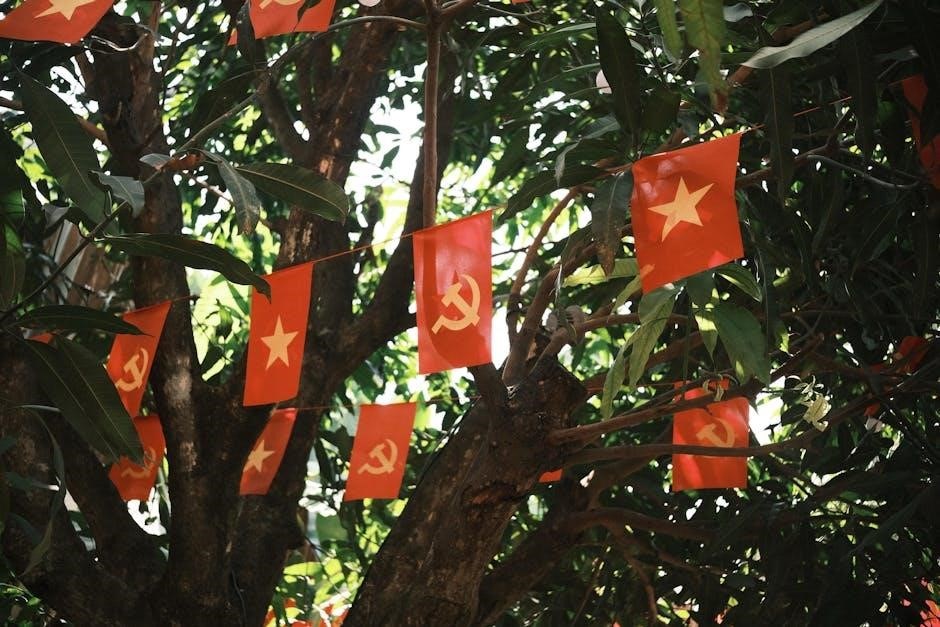
Discussing the Communist Party (CCP) and its ideology requires careful navigation of sensitive topics and potential censorship. Direct criticism is heavily policed, leading to the development of indirect references and coded language. Terms relating to historical events, like the Cultural Revolution, are often subject to scrutiny, prompting users to employ euphemisms or allusions.
The CCP’s core tenets, such as “Socialism with Chinese Characteristics,” are sometimes referenced sarcastically or used to highlight perceived contradictions. Online discussions about Party corruption or internal power struggles are heavily monitored, pushing dissent into the realm of subtle innuendo and veiled commentary. This creates a complex landscape where meaning is often layered and dependent on shared understanding within online communities.
V; The Impact of Technology and Social Media
Technology, particularly platforms like WeChat and Weibo, has profoundly impacted the dissemination and evolution of Chinese political slang. These platforms provide spaces for rapid information sharing, allowing new terms and phrases to emerge and spread quickly amongst users. However, this accessibility is counterbalanced by sophisticated censorship mechanisms employed by the government.
The rise of Artificial Intelligence (AI) adds another layer of complexity. As seen with the OnePlus AI Writer incident, AI systems can inadvertently – or intentionally – block politically sensitive terms, demonstrating the power of technology to shape online discourse. This constant interplay between user creativity and censorship creates a dynamic “cat-and-mouse” game, driving the development of increasingly subtle and inventive forms of political expression online.
A. WeChat and Weibo as Platforms for Slang Dissemination
WeChat and Weibo serve as crucial conduits for the spread of political slang in China, functioning as digital public squares where coded language flourishes. WeChat, with its private messaging and “Moments” feature, allows for discreet sharing amongst trusted networks, fostering the development of niche slang. Weibo, a more public microblogging platform, facilitates wider dissemination, enabling terms to trend and reach a broader audience.
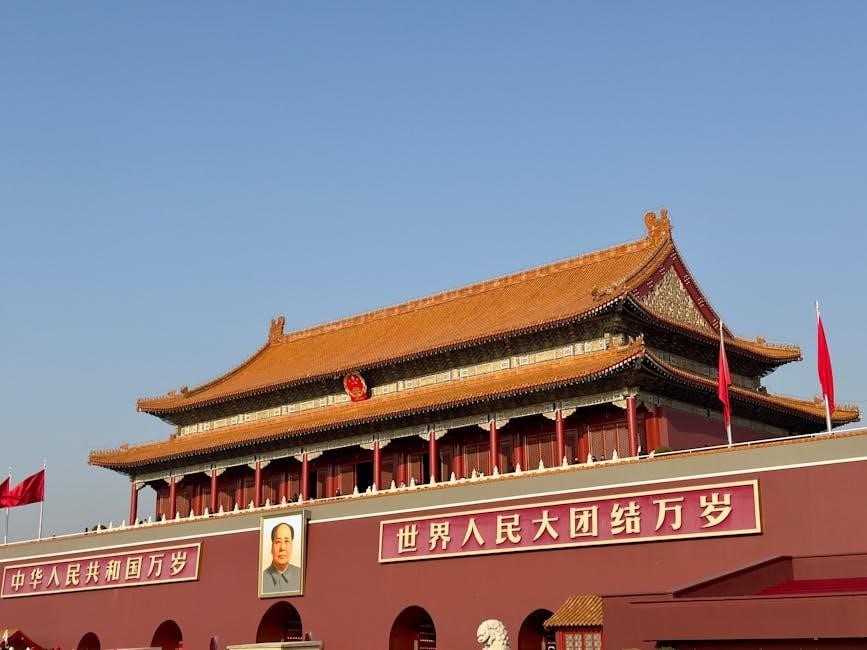
The viral nature of these platforms means that slang can rapidly evolve and adapt, often in response to current events or censorship efforts. Users creatively employ homophones, puns, and imagery to circumvent restrictions, relying on shared understanding and in-group knowledge. These platforms aren’t simply passive channels; they actively shape the slang itself, accelerating its lifecycle and influencing its meaning.
B. The Role of AI and Censorship in Shaping Slang
The intensifying interplay between artificial intelligence (AI) and censorship profoundly impacts the evolution of Chinese political slang. As censorship becomes more sophisticated – exemplified by incidents like OnePlus’s AI Writer blocking politically sensitive terms – users are compelled to innovate even more creative forms of expression. AI-powered censorship algorithms attempt to identify and suppress dissenting voices, but this often leads to an escalating “cat-and-mouse” game.
This dynamic fuels the creation of increasingly subtle and nuanced slang, relying on ambiguity and contextual understanding to evade detection. The very act of censorship inadvertently promotes slang, as blocked terms become symbols of resistance and attract further attention. AI’s attempts to control the narrative ironically contribute to the slang’s virality and cultural significance, demonstrating the limitations of purely technological solutions to political expression.
VI. Current Trends and Future Directions
Contemporary Chinese political slang continues to rapidly evolve, mirroring the nation’s shifting socio-political landscape. Emerging terms often reflect anxieties surrounding economic inequality, social control, and international relations. The ongoing tension between citizen expression and state censorship remains a central driver of this linguistic innovation, with new slang frequently arising in response to specific events or policies.
Looking ahead, the “cat-and-mouse” game between users and censors will likely intensify. Expect increased reliance on visual memes, coded references, and platforms offering greater anonymity. AI’s role will be pivotal – both in censorship efforts and in users’ attempts to circumvent them. The future of Chinese political slang isn’t simply about new words; it’s about a constant negotiation of meaning within a highly controlled information environment.
A. Emerging Slang Reflecting Current Political Issues
Recent slang demonstrates a growing concern with economic precarity and the pressures of modern life. Terms referencing “” (tang ping – lying flat), a philosophy of opting out of societal expectations, gained traction as a response to intense competition and limited opportunities. Simultaneously, phrases criticizing excessive nationalism or blind faith in official narratives are circulating, albeit cautiously.
Discussions surrounding China’s “zero-COVID” policy and its subsequent abrupt end spawned a wave of slang expressing frustration and disillusionment. The OnePlus AI Writer incident itself sparked commentary, highlighting anxieties about technological control and censorship. New terms are constantly being created to discuss sensitive topics like the property market crisis and geopolitical tensions, often employing irony and allusion to evade detection.
B. The Ongoing Cat-and-Mouse Game Between Users and Censors

The dynamic between Chinese internet users and censors resembles a perpetual game of adaptation and counter-adaptation. As soon as a new slang term gains popularity, censorship mechanisms swiftly identify and block it, prompting users to devise alternative expressions. This cycle fuels creativity, leading to increasingly sophisticated and subtle forms of coded language.
The OnePlus AI Writer controversy exemplifies this struggle, revealing the lengths to which censorship extends, even into artificial intelligence. Techniques like xiehouyu (homophones) and deliberate misspellings remain prevalent, constantly evolving to circumvent filters. Censors employ AI to detect subversive content, but users leverage the same technology to create and disseminate slang, testing the boundaries of permissible speech. This ongoing tension shapes the landscape of online discourse in China, fostering a culture of linguistic innovation and resistance.